


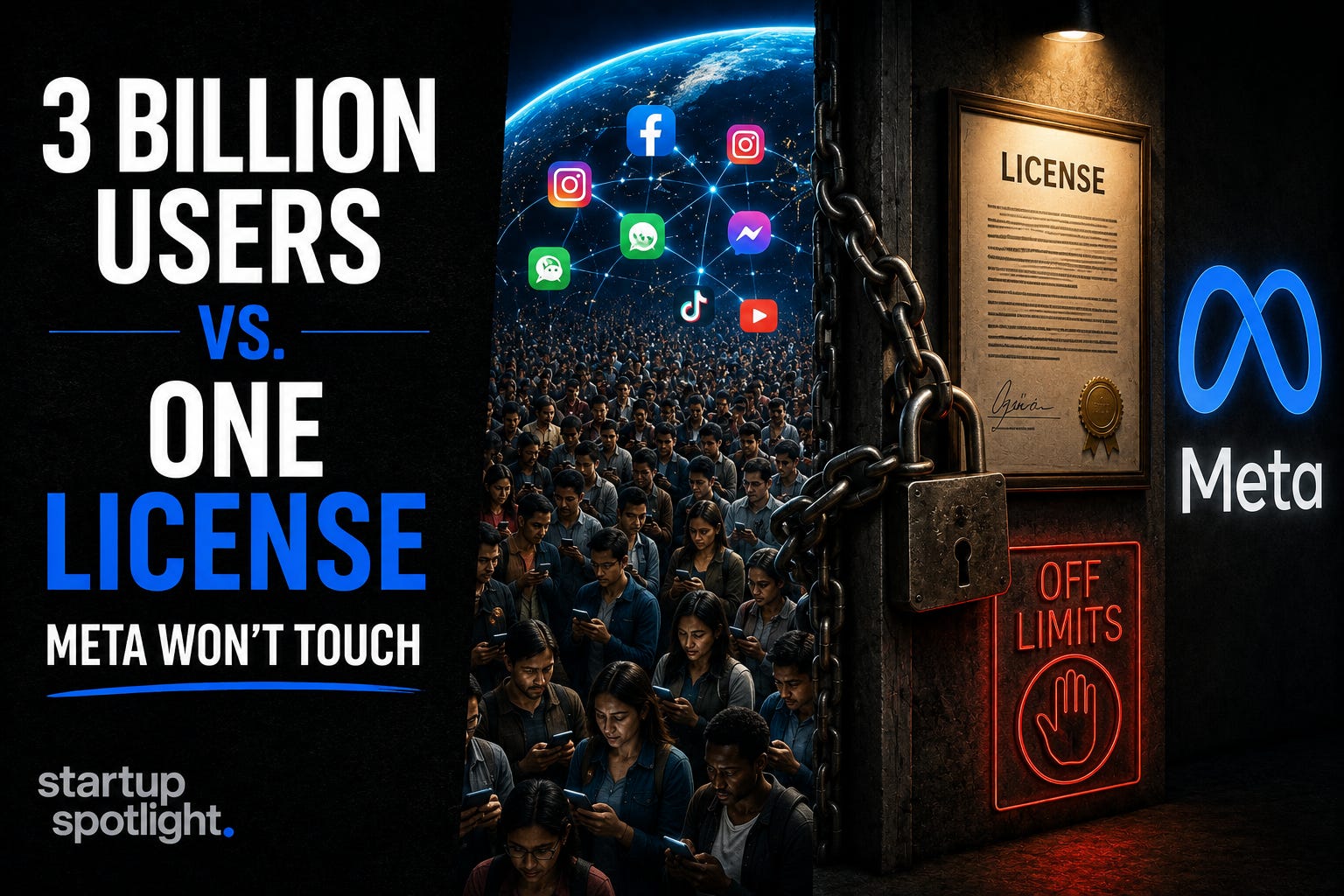
Meta has more than 3 billion users and just decided not to point a single one of them at real money.
Per NPR’s reporting this week, Zuckerberg tried to buy Kalshi before building his own thing. When the talks stalled, Meta started work on its own prediction market app. Here’s the tell: Meta’s version uses play money, not real cash. Its AI writes the questions and settles who’s right. The most powerful distribution machine ever built walked up to a booming market and left out the part that actually prints revenue.
And it is booming. Per The Block, monthly volume across Kalshi and Polymarket went from roughly $28 billion in June 2025 to nearly $220 billion a year later, most of it sports. Kalshi was valued at $22 billion in May, up from about $2 billion a year earlier, and the Financial Times reports it’s now in talks at around $40 billion, possibly closing in Q3. Polymarket sits near $10.7 billion per PitchBook and has been chasing a round closer to $15 billion. These are reported figures, and private valuations move fast, so treat them as snapshots, not gospel.
Now apply Counter-Positioning, one of the models I break down in my book.
Counter-positioning is when a challenger picks a business model the giant can’t copy without hurting itself. Everyone assumes it works in the upstart’s favor. Flip it here. Kalshi runs as a federally regulated exchange under the CFTC. That status is expensive and comes with lawsuits, surveillance duties, and a running fight with state regulators. But it’s also the exact posture Meta won’t take, because putting real-money, gambling-adjacent contracts next to its ad business invites a regulatory mess it has every reason to avoid. So Meta counter-positioned itself into play money. The regulated real-money model isn’t the risky part Meta’s dodging. It’s the moat Meta can’t step into.
Here’s my read, and it’s the opposite of the headlines. People see Meta entering and think Kalshi’s in trouble. Read the product spec instead. When the biggest platform on earth shows up and deliberately leaves the money out, it’s telling you the license is the hard part, not the interface. Anyone can build the buttons. Almost no one can carry the regulatory weight.
I built prediction markets at Robinhood, so I’ve watched up close how the regulatory perimeter, not the UI, decides who gets to offer what. It’s the same reason we build athlete offerings at /mkt under Reg A+ with tZERO as the trading infrastructure. The compliance architecture is the barrier a competitor can’t clone over a weekend.
One honest caveat: this doesn’t make Kalshi a lock. A new Illinois law treating sports-tied contracts as wagers takes effect today, Kalshi has sued, and the broader state-versus-federal fight is still live. Tighten the perimeter enough and it squeezes the regulated players too. The moat cuts both ways. That’s the risk to watch.
None of this is investment advice.
Disclaimer: This post is for informational and educational purposes only. It is not investment, financial, legal, or tax advice, and it’s not a recommendation or solicitation to buy, sell, or trade any security, contract, or instrument, or to participate in any prediction market. Valuations, volumes, and funding figures reflect public reporting and third-party estimates that vary by source and change over time; past performance and private valuations are not indicative of future results. Regulatory status referenced here is described generally and is subject to ongoing litigation and change. /mkt is referenced only to illustrate how regulated-market infrastructure is built, and nothing here is an offer or solicitation with respect to any security.
If you want the mental models behind breakdowns like this, my book, Mental Models: How to Think, Act, and Win, is on Amazon now.


Startup Spotlight is for informational and educational purposes only. It is not investment advice, an offer, or a solicitation to buy or sell any security. Company metrics are self-reported, and funding details are drawn from public reporting and company statements. Figures may change.