
Most biotechs that freeze their core platform and lay off staff don’t get a second act. LifeMine just got one, and it’s a big one.
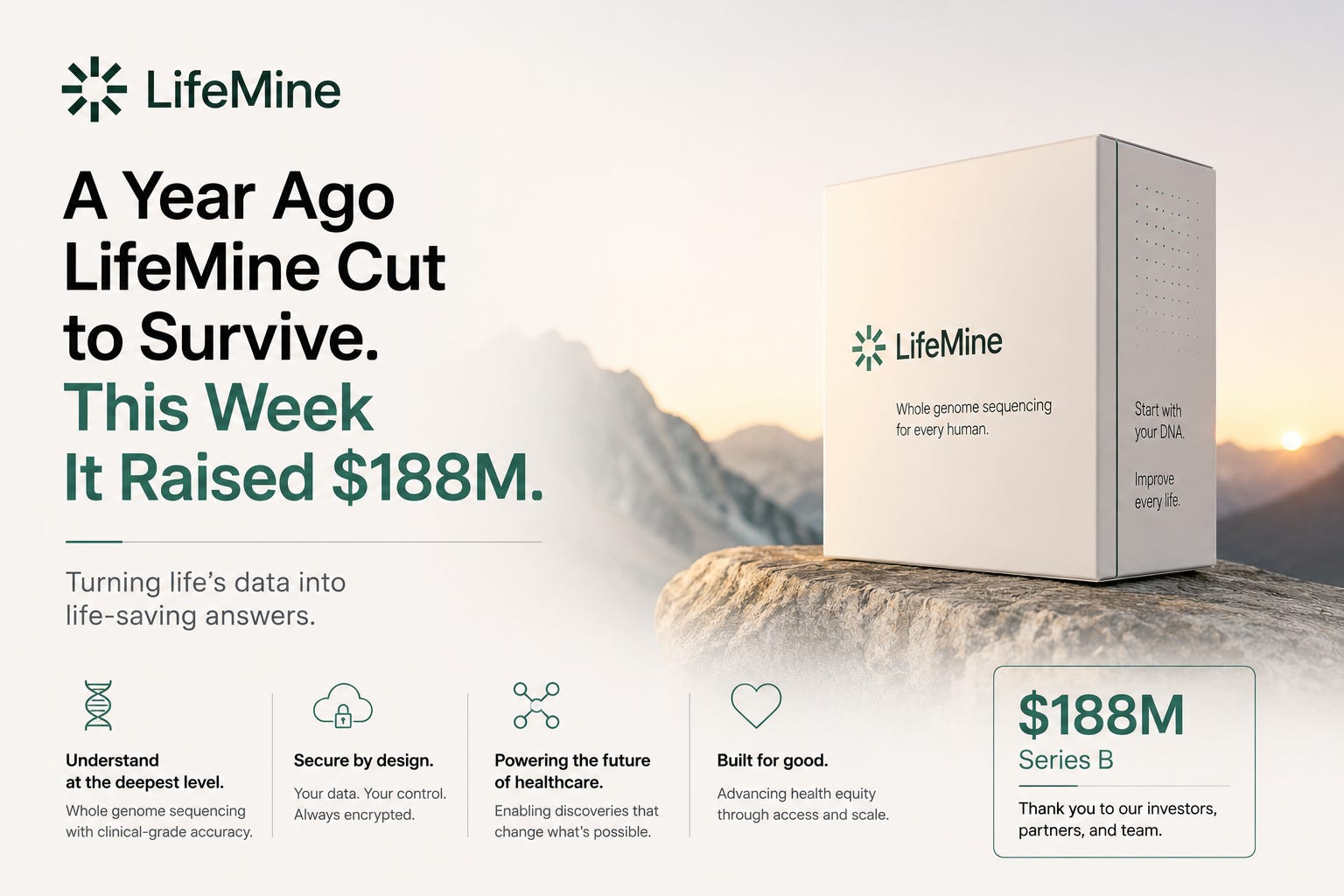
On Thursday, LifeMine Therapeutics announced a $188 million Series E led by Milky Way Investments, with new money from Bezos Expeditions and Gates Frontier and returning backers including GSK and ARCH Venture Partners. The company disclosed it alongside a previously raised $75 million Series D, for $263 million total. CEO Greg Verdine has said the Series E came in three to four times larger than the company originally planned for the round.
Now rewind about a year. LifeMine had cut staff and put its fungus-based drug-discovery platform on ice to pour its remaining resources into a single asset: LIFE-001, an experimental immunosuppressant for organ transplant patients, derived from fungi. That’s the same family that gave medicine statins, penicillin, and cyclosporine. The company says the drug has completed dosing in more than 100 healthy volunteers so far. Every forward-looking clinical timeline here is the company’s own, not settled fact.
Here’s the mental model from my book worth applying: Inversion.
Most founders ask, “How do we win?” Inversion flips the question: “How do we lose, and how do we avoid that?” A year ago, LifeMine’s most likely way to lose wasn’t picking the wrong molecule. It was running out of cash before any molecule could prove itself. So the team did the unglamorous thing. It narrowed, cut, and preserved enough runway to still be alive when the biotech funding market thawed.
That’s the whole game in a downturn. You don’t have to be brilliant. You have to still be standing when conditions change. LifeMine froze the exciting part, a platform the company says spans roughly 1,200 potential drug targets, precisely so it could survive to unfreeze it later. This week, with fresh capital, unfreezing it is exactly the plan management laid out.
My contrarian take: in a boom, the market rewards the companies that push the hardest. In a bust, it rewards the ones that refuse to die. Those are different skills, and the second one is wildly underrated. Plenty of “better” biotechs with flashier stories aren’t around to raise this round. LifeMine is, because it inverted the question early and asked how it might not make it, then removed that path.
Survival isn’t the consolation prize. Sometimes it’s the entire strategy.
If this was useful, share it with someone who builds things. And if you want the full toolkit of 50 mental models, you can grab my book, Mental Models: How to Think, Act, and Win, on Amazon right now.
Compliance and attribution: Figures reflect LifeMine’s August 6, 2026 announcement, corroborated by BioPharma Dive, BioSpace, and Endpoints News. LifeMine did not disclose a post-money valuation. Statements about the size of the round relative to plan, platform scope, drug candidate progress, and future clinical timelines are company-reported and forward-looking, not settled fact or independent projection. Nothing here is medical advice or a characterization of any treatment’s safety or efficacy. This post is for informational and educational purposes only. It is not investment advice, research, or an offer or solicitation to buy or sell any security.
If you want the mental models behind breakdowns like this, my book, Mental Models: How to Think, Act, and Win, is on Amazon now.


This post is for informational and educational purposes only. It is not investment advice, a recommendation, or a solicitation to buy or sell any security. Funding figures, revenue, and valuation are as reported by the company, regulatory filings, and named outlets; the ~$470M valuation is a reported, time-sensitive snapshot and not independently verified. Dhoni's individual investment amount was not disclosed. The /mkt reference is a structural illustration of building in regulated markets and is not an offer or solicitation. Past performance and third-party investment decisions do not indicate future results.