




Company Overview
Here’s a number most consumers have never thought about. Chariot says the average class action payout is about $32 per person, citing a CFPB analysis, and that only about 4% of harmed consumers ever file a claim. Its own users, the company says, average roughly $460.
Those are company-reported figures. Haircut them hard and the gap is still the story.
Chariot Claims is a legal tech platform that finds consumers who may have claims against large companies (think website tracking without consent, hidden checkout fees, subscriptions that are easy to start and hard to cancel), checks whether they qualify and routes them to partner law firms. Chariot isn’t a law firm and doesn’t file cases itself. It does the messy part firms hate: finding claimants, collecting evidence and managing payouts to thousands of people.
The round: On October 15, Chariot announced a $10M Series A led by Mike Dodd at Silverton Partners. Indicator Ventures, which led a $3.6M seed in April 2025, returned, along with Lightbank, FJ Labs and others. Total raised: $15.7M.
The founder: Zim Hang, co-founder and CEO, is a three-time founder. His first company turned sleep research into a smart pillow and was sold to a medical device operator. He then worked in health tech and fintech, built a Web3 startup and landed in legal tech after helping another founder build a class action settlement tracker.
Traction (all company-reported): The company started in 2023 as ClaimClam and rebranded in 2025, around when it moved to its current model. It says it now takes in more than 200,000 pre-qualified claim submissions a month and has taken on about 80 cases since the pivot. It has around 15 employees and says it’s breaking even.
That last point matters. Breakeven before a Series A is rare.
The Market
To understand Chariot, you need to understand the trap big companies built for themselves.
For years, the playbook was simple: put a mandatory arbitration clause and a class action waiver in your terms. Customers can’t band together in court, nobody arbitrates alone over a $40 charge, and the claims disappear.
Then plaintiffs’ lawyers noticed the catch. Under consumer arbitration rules, the business pays most of the fees. One claim is cheap. Ten thousand individual claims filed at once is not.
The numbers show how fast this flips:
DoorDash: About 6,250 couriers filed individual arbitration claims, generating roughly $12M in AAA filing fees, according to an American Bar Association analysis. DoorDash refused to pay, and a federal court held it to its own arbitration agreement.
Amazon: Facing about 75,000 individual demands from Alexa users, Amazon dropped its arbitration clause in 2021, per the same ABA analysis.
The AAA’s own data: 82 consumer mass arbitrations with more than 247,000 individual filings for the period ending 2025.
Even after the AAA rewrote its rules in January 2024 to blunt this, the ABA estimated that administering 500 cases through hearing could still top $5M, before a single lawyer bills an hour.
The gap Chariot fills: Mass arbitration only works at volume, and volume is an operations problem, not a legal one. As Hang put it, “It’s just really inefficient for them to try to build workflows around 10,000 claimants or 100,000 claimants.” Law firms argue cases. They don’t run ad campaigns, verify proof of purchase and pay out 50,000 people. Chariot does.
Market size: There’s no clean TAM for mass arbitration, so be skeptical of anyone who gives you one. Here’s what we do know:
The top ten US class action settlements in each practice area totaled about $79B in 2025, per Duane Morris’s annual report, the highest in two decades. The consumer fraud slice alone was about $2.1B.
Legal tech startups raised a record $4.6B in 2025 and more than $3B so far in 2026, per Crunchbase data.
Why now: Three things lined up. Arbitration clauses are now nearly everywhere in consumer contracts. Privacy claims over website tracking, biometrics and subscription auto-renewal have multiplied. And AI makes it far cheaper to scan for patterns of alleged misconduct, qualify claimants and organize evidence at scale.
Business Model and Moat
How it makes money: Chariot charges partner law firms flat service fees, per Crunchbase News. The firms work on contingency. The company hasn’t disclosed its fee levels.
That structure is deliberate, and it’s smart. Most US state bar rules restrict lawyers from sharing legal fees with non-lawyers. A flat service fee keeps Chariot on the vendor side of that line. A cut of recoveries would be far more lucrative and far more legally exposed.
The funnel: Hang told Crunchbase the team reviews a few hundred potential cases a month, tests ads on about 30 and pursues roughly 10 more seriously. That’s a venture-style portfolio applied to litigation.
The competition:
Settlement finder sites. They list existing settlements. They don’t originate cases.
Plaintiffs’ firms with in-house intake. Some firms run their own marketing. Most don’t want to run consumer software at scale.
Big companies themselves. The real opponent. More on that below.
What’s defensible:
Claimant data and conversion know-how. Every campaign teaches Chariot which issues, ads and qualification flows work. That compounds.
Firm relationships. If Chariot becomes the default intake layer for plaintiffs’ firms running mass arbitrations, firms will route cases to it first.
Verification infrastructure. Courts are cracking down on unsupported claims. In Wallrich v. Samsung, the Seventh Circuit said claimants must prove each one actually agreed to arbitrate, and a list of names wasn’t enough. Whoever builds the best proof-of-claim pipeline wins. Chariot says it’s building integrations that verify claims through proof of purchase or breach notices consumers choose to share.
What’s not defensible: the legal theory. Any firm can file the same claims. Chariot’s edge is speed and scale, not secret law.
Spence’s Take
Mental Model #1: Asymmetry
The best bets have limited downside and large upside. Arbitration clauses were designed to give companies exactly that: the consumer’s cost to fight is high, so the company’s risk is low.
Mass arbitration flips the asymmetry. Now the cost of each claim lands mostly on the company in the form of fees, before anyone even argues the merits. Multiply that by 10,000 claimants and the clause meant to protect the company becomes the most expensive line in its terms.
Chariot is the operations engine that makes that asymmetry real. Without volume, there’s no pressure. Without organized claimants, there’s no volume. That’s the bull case: Chariot owns the bottleneck.
I see the same pattern at /mkt, where we structure athlete offerings under Reg A+ with tZERO as trading infrastructure: the rules decide who’s allowed to play. Chariot isn’t trying to practice law. It’s built a business that sits exactly where the rules say a non-lawyer can add value.
Mental Model #2: Incentives
Show me the incentive and I’ll show you the outcome. Everyone in this system has one, and several of them point against Chariot.
What could kill it:
Companies rewrite the rules. On August 14, 2026, Amazon reinstated arbitration with JAMS mass arbitration procedures that kick in at 25 similar demands and batch them. Expect more companies to follow with batching and bellwether clauses designed to drain the economics.
Courts tighten proof. After Wallrich, claimant verification is a hard requirement. Per the ABA, only about 10% of AAA mass arbitration claims advanced past the initial stage in its data. Volume without quality is worthless.
Fee fights. The Second Circuit held in 2025 that courts can’t compel a party to pay disputed fees mid-arbitration. Companies that refuse to pay buy time.
Legal and reputational risk. Chariot says it has received cease-and-desist letters, including over its use of company names in ads. Legal tech firms that get marketing wrong draw regulator attention fast.
Legislation. Chariot itself flags California’s SB 690, which would restrict certain private privacy lawsuits, as a threat to consumer claims.
Partner concentration. If a handful of law firms drive most of the revenue, they hold the leverage.
Chariot’s opponents are the best-funded legal departments on earth, and they’re adapting.
Why It Matters
(a) For investors and VCs
This is a company worth watching, not a call on anything. A breakeven Series A with a contrarian, regulation-shaped model is unusual. Signals I’d track:
Claims-to-filing conversion. 200,000 monthly submissions only matter if they survive verification.
Recovery data. Whether the reported ~$460 average holds as volume grows and defendants push back.
Arbitration clause trends. If big platforms copy Amazon’s batching approach, per-claim economics shrink.
Revenue mix. How concentrated fees are across partner firms.
New categories. Chariot says it’s moving into children’s, financial and health data privacy claims.
(b) For potential customers
Chariot has two kinds of customers.
Consumers: The pitch is a way to find out whether you may have a claim against a company you already do business with, without hiring a lawyer yourself. Chariot says it’s building tools that surface possible claims automatically from data you choose to share. Understand what the partner firm takes on contingency, and remember a potential claim isn’t a guaranteed payout.
Law firms: The pitch is outsourced claimant acquisition, evidence collection and payout management, with costs covered upfront, according to LawNext. For a firm that wants to run mass arbitrations without building a consumer marketing operation, that’s the product.
For competitors and builders
Four lessons worth taking:
Find the cost someone else designed for you to ignore. Arbitration clauses assumed consumers wouldn’t organize. Chariot made organizing cheap.
Sell to the professional, not around them. Chariot didn’t try to replace lawyers. It made them more productive and stayed on the right side of fee-sharing rules.
Treat compliance as a product feature. Verification is now what decides whether claims count. Build it first.
Run a portfolio, not a single bet. Hundreds reviewed, dozens tested, a handful pursued.
Corporate side: the cheapest mass arbitration is the one you never trigger. Fix drip pricing, cancellation flows and tracking consent first.
The Bottom Line
Chariot isn’t really a legal company. It’s a growth and operations company that found the one place in American law where volume is the weapon. The traction is real, but so is the counterattack, and the next two years of arbitration clause rewrites will decide whether this asymmetry lasts.
This is Startup Spotlight. Every week I break down a company worth watching. Subscribe for $7.99/mo to get the full analysis.
Startup Spotlight is a reader-supported publication. To receive new posts and support my work, consider becoming a free or paid subscriber.
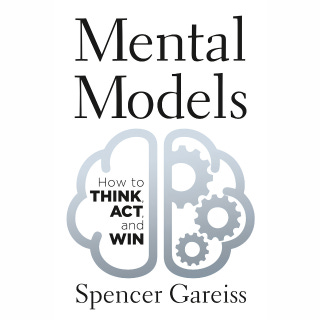
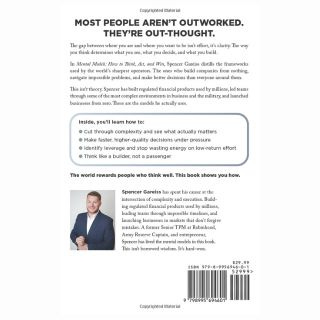
If you want the mental models behind breakdowns like this, my book, Mental Models: How to Think, Act, and Win, is on Amazon now.
Author affiliation: Spencer Gareiss is Chief Product Officer at /mkt, which structures athlete offerings under Regulation A+ using tZERO trading infrastructure. /mkt is referenced as an industry example only. This post is not sponsored or paid for by any company mentioned.

Thanks for reading Startup Spotlight! This post is public so feel free to share it.