
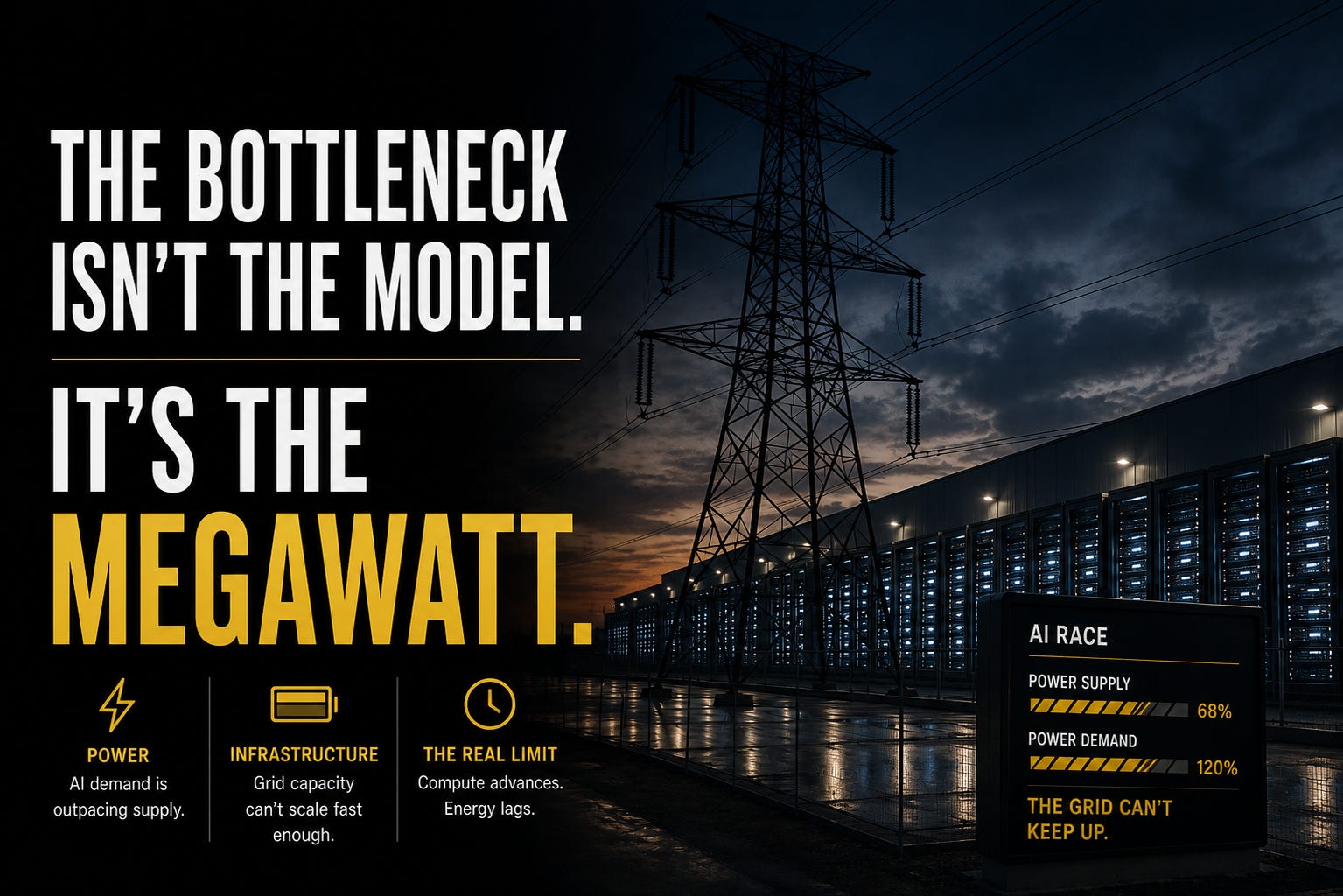
Everyone’s pouring money into smarter AI. Almost nobody’s asking where the electricity comes from. This week, one company raised $470 million on exactly that question.
Antares Nuclear closed a $470 million Series C, co-led by Paradigm and Caffeinated Capital, with Point72 Ventures, Shine Capital, and Industrious Ventures joining. The round breaks down to $370 million in equity and $100 million in debt, and it brings the three-year-old company’s total to $604 million. Not bad for a startup that closed a $96 million Series B just seven months ago.
Antares builds microreactors. Small modular nuclear units that put out between 100 kilowatts and 1 megawatt, enough to power up to 750 homes, per TechCrunch. The company says its Mark-0 reactor reached criticality earlier this year under the Department of Energy’s reactor pilot program, in partnership with Idaho National Laboratory. Paradigm called it the first private advanced reactor criticality in decades. Antares is one of three finalists in the Pentagon’s advanced nuclear program, and it’s aiming to put working reactors on U.S. military bases by 2028.
Here’s the model I keep coming back to: the Theory of Constraints. Every system has one bottleneck that caps the whole thing, and improving anything except that bottleneck is wasted motion. You can add lanes to a highway all day. If one toll booth is jammed, traffic still doesn’t move.
Right now the AI story is all about the model layer and the chips. But every one of those chips needs power, and the grid wasn’t built for this. Data centers running AI workloads are pushing electricity demand up faster than utilities can add supply. That’s the toll booth. All the GPUs in the world don’t matter if you can’t plug them in. Investors are starting to see it, which is why $470 million just went to a company that makes electrons instead of tokens. It’s the same pattern I see building in regulated markets at /mkt. The flashy front end gets the attention. The boring infrastructure underneath decides whether anything actually ships.
Now the contrarian part. The obvious read is “AI needs power, so power is the trade.” Fine. But look at where this money’s going. Not to the grid. Not to utility-scale solar. To reactors small enough to sit on a single military base, sized for one customer at a time. That’s a bet that the winning move isn’t fixing the grid. It’s routing around it.
If that’s right, the next decade of energy doesn’t look like bigger plants and longer transmission lines. It looks like power generated right next to where it’s used, one site at a time. Centralized systems getting quietly replaced by distributed ones, the same way mainframes gave way to personal computers. The constraint doesn’t just get relieved. It gets designed out.
I built financial infrastructure for a living, and the lesson holds everywhere. Whoever owns the bottleneck owns the market. Right now, the bottleneck is a wall socket.
If this was useful, share it with someone who builds things. And if you want the full toolkit of 50 mental models, you can grab my book, Mental Models: How to Think, Act, and Win, on Amazon right now.
This post is for informational and educational purposes only. It is not investment advice, nor an offer or solicitation to buy or sell any security. Funding figures and technical milestones are as reported by Antares, its investors, and cited outlets, and have not been independently verified. Spencer Gareiss is Chief Product Officer at /mkt; the reference to /mkt is illustrative only and is not a solicitation. Views are his own.
If you want the mental models behind breakdowns like this, my book, Mental Models: How to Think, Act, and Win, is on Amazon now.


This post is for informational and educational purposes only. It is not investment advice, a recommendation, or a solicitation to buy or sell any security. Funding figures, revenue, and valuation are as reported by the company, regulatory filings, and named outlets; the ~$470M valuation is a reported, time-sensitive snapshot and not independently verified. Dhoni's individual investment amount was not disclosed. The /mkt reference is a structural illustration of building in regulated markets and is not an offer or solicitation. Past performance and third-party investment decisions do not indicate future results.