
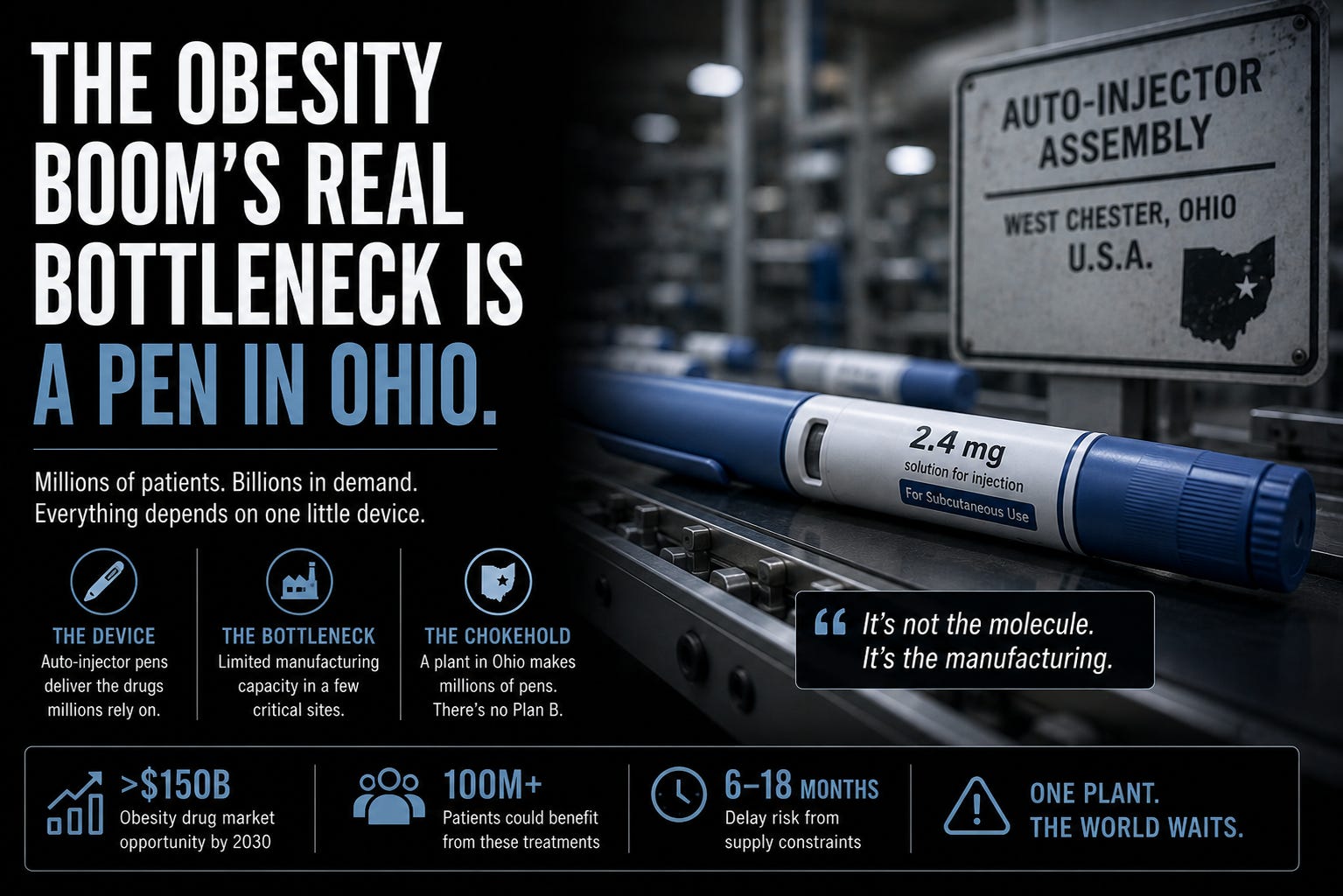
The hardest part of selling a blockbuster weight-loss drug in 2026 isn’t inventing the molecule or marketing it. It’s filling enough injector pens, fast enough, to keep up with demand. That unglamorous problem is where a lot of money is quietly moving.
On July 30, the contract manufacturer Resilience and Eli Lilly announced a combined $750 million investment to expand pharmaceutical manufacturing in the Cincinnati area, per the companies’ announcement. The expansion adds production of Lilly’s KwikPen injectable device, the delivery system for its diabetes and obesity medicines, at a site that’s been making Mounjaro and Zepbound since the two companies first partnered in 2023. The companies say the project adds at least 400 skilled jobs, pushes Resilience’s Ohio headcount past 1,400, and reaches full operations in early 2027.
Notice what this isn’t. It isn’t a new drug, a new trial, or a flashy AI round. It’s capacity. Specifically, it’s domestic capacity to fill and finish the devices patients actually inject, which has been one of the tightest chokepoints in the entire obesity-drug boom.
Here’s the model I’d reach for. Cornered Resource: when a company secures preferential access to a scarce, valuable asset that rivals can’t easily replicate, it builds an edge no amount of marketing can copy. Everyone in this category has a molecule. Far fewer have guaranteed, at-scale, U.S.-based fill-finish capacity locked in years ahead of demand. By funding dedicated capacity through a partner instead of fighting for slots on the open market, Lilly is turning a shared bottleneck into something closer to a private one.
That reframes how to read the whole GLP-1 story. The headlines track prescriptions, sales, and which drug posts the best trial data. But the constraint that actually caps growth right now is physical: how many pens roll off a line each week, and where those lines sit. Demand for these drugs isn’t the scarce thing. Supply is. And supply is a manufacturing and logistics problem, not a marketing one.
So here’s the contrarian close. In a gold rush, everyone studies the gold. The durable winners study the supply chain. The companies pulling ahead in obesity drugs aren’t only the ones with the best science, they’re the ones who saw two years ago that capacity would be the fight and started building while competitors were still counting demand.
One caution, because it cuts both ways. Capacity you build today is a bet that today’s demand holds. Concentrated, dedicated capacity is also concentrated exposure if pricing, policy, or a next-generation oral pill changes the picture. A cornered resource is powerful right up until the thing it corners stops being scarce.
If this was useful, share it with someone who builds things. And if you want the full toolkit of 50 mental models, you can grab my book, Mental Models: How to Think, Act, and Win, on Amazon right now.
Spence
This post is for informational purposes only and is not investment advice, a recommendation, or a solicitation to buy or sell any security. Figures are as reported by the companies involved and have not been independently verified. Company names and products are referenced for illustration only. Always do your own research and consult a licensed professional before making financial decisions.
If you want the mental models behind breakdowns like this, my book, Mental Models: How to Think, Act, and Win, is on Amazon now.


This post is for informational and educational purposes only. It is not investment advice, a recommendation, or a solicitation to buy or sell any security. Funding figures, revenue, and valuation are as reported by the company, regulatory filings, and named outlets; the ~$470M valuation is a reported, time-sensitive snapshot and not independently verified. Dhoni's individual investment amount was not disclosed. The /mkt reference is a structural illustration of building in regulated markets and is not an offer or solicitation. Past performance and third-party investment decisions do not indicate future results.